Ohio Squatters’ Rights: Quick Facts (2026)
Before we get into the details, here is the Ohio-specific data every landlord should know. These figures come straight from the Ohio statutes and are current as of July 2026.
| Question | Ohio rule |
|---|---|
| Standard adverse possession period | 21 years |
| Shorter paths | None — Ohio has one of the longest standard periods in the country |
| Must the squatter pay property taxes? | Not required |
| Key statute | Ohio Rev. Code § 2305.04 |
| How landlords remove a squatter | Serve written notice, then file an eviction (unlawful detainer) or ejectment action in court — never remove a squatter yourself |
This is general information, not legal advice — statutes change and courts add nuance, so confirm current law with a Ohio attorney.
Squatter’s rights in Ohio give certain opportunities to a squatter in order to gain title or possession of a vacant property if they meet the minimum requirements.
For that reason, if you have rental property in Ohio, it is important to be prepared, educated, and know this information to possibly avoid a lengthy and costly situation.
In this article, we will highlight what a squatter is, how squatter’s rights in Ohio work, and what you can do to protect your property from a squatter.
Quick refresher before the Ohio-specific rules: a squatter occupies property without the owner's permission (unlike a trespasser, who can be removed by police immediately, a squatter claims some right to be there), and adverse possession is the legal doctrine that can eventually turn long-term occupation into actual ownership. Courts require possession to be hostile, actual, open and notorious, exclusive, and continuous. We cover all five elements in depth in our national guide to squatters’ rights and adverse possession — everything below is about how Ohio applies them.
Squatter’s Rights in Ohio
Ohio sets one of the highest bars in the country: 21 years of exclusive possession under Ohio Rev. Code § 2305.04, and the Ohio Supreme Court (Grace v. Koch, 1998) requires the claimant to prove every element — hostile, actual, open and notorious, exclusive, continuous — by clear and convincing evidence, a tougher standard than most civil claims.
There is no color-of-title shortcut and no tax-payment path in Ohio; 21 years is the floor no matter what paperwork the occupant holds. Successive occupants can sometimes “tack” their possession periods together if they are in privity (for example, one handed the claim to the next), which is the scenario Ohio landlords most realistically need to watch: a fence line or driveway encroachment that quietly persists across two decades, not a stranger living openly in a house for 21 years.
Questions?
Chat with a Squatters Rights Expert Now! Start Chat
Does Color of Title Help in Ohio?
A squatter has color of title when they hold a defective ownership document — a bad deed, a botched foreclosure paper. In Ohio, Ohio offers no color-of-title discount — 21 years is the minimum either way. Our adverse possession guide covers the doctrine in full.
How to Remove Squatters in Ohio
Ohio removes unlawful occupants through a forcible entry and detainer action in municipal or county court. The process is relatively quick as lawsuits go, but self-help — changing locks, removing belongings — remains off-limits until the court issues a writ.
It is important to note that squatter’s rights in Ohio grant a squatter certain rights compared to a trespasser, and dealing with a squatter requires caution from the landlord.
For that reason, when dealing with a someone that has taken possession of a property without the owner’s permission, it is recommended to consult a local attorney that specializes in eviction law and has vast knowledge of eviction laws and squatter’s rights in Ohio.
Although, in most cases, evicting a squatter must be handled through the Ohio court system with judicial action, there are certain avenues a landlord or property manager can take in order to remove a squatter from their property.
Call the Sheriff
The sheriff’s office may be unable to remove the person from the property if the person taking possession of the property is considered a squatter and not a trespasser.
However, calling the sheriff is a good initial step because it logs a record of the incident and generates a report that the property owner can then show as evidence, if the case escalates to the court system.
Serve a Notice to Vacate
During the eviction process, the property owner or manager must give notice to the person occupying the property before they can be legally removed by the sheriff’s office.
And even though, at the early stages, you may not be looking at a situation in which you have to involve the court system, If the squatter does not have a legal claim to the property through adverse possession or color of title, in Ohio, a landlord can remove a squatter by serving them with a 3-Day Notice to Quit.
Start the Eviction Proceedings
Evicting a squatter requires due processes from the part of the landlord and requires a careful approach.
If a squatter is claiming adverse possession and is refusing to leave the premises after the time period allotted in the 3-Day Notice to Quit, then the next step would be to start proceedings in the county’s court.
This will initiate a hearing process in which the case will be presented in front of a judge and a ruling will be made based on the case details.
We recommend consulting an attorney with vast knowledge of property law in Ohio in order to avoid possible legal recourses against you, or the property.
Need an Eviction Notice?
Free Real Estate Documents in Minutes! Click Here
How to Keep Squatters Out of Your Ohio Property
Prevention beats litigation every time — especially with a waiting period this consequential. The essentials:
- Visit vacant properties regularly and have a neighbor or property manager check between visits.
- Secure every entry point — locks, alarms, cameras, and good exterior lighting.
- Make it look occupied: maintained landscaping, mail collected, utilities on timers.
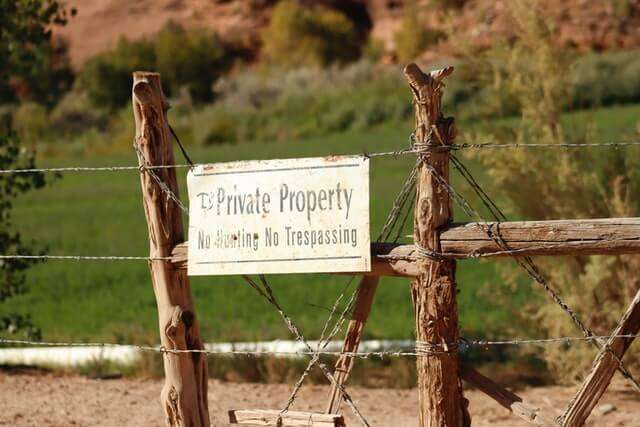
- Post and document: no-trespassing signage, dated photos, and a paper trail of every inspection.
- Act immediately — the clock only runs while possession goes unchallenged, so respond to any sign of occupation the day you find it.
PropertyCtrl can help you log inspections and maintenance so that paper trail builds itself.
Squatters’ Rights in Other States
Adverse possession deadlines vary wildly by state — from 5 years in California to 30 in New Jersey. Start with our national guide to squatters’ rights and adverse possession, or jump straight to another state:
- Squatters’ rights in Michigan — 15 years
- Squatters’ rights in Indiana — 10 years
- Squatters’ rights in Pennsylvania — 21 years
- Squatters’ rights in New York — 10 years
- Squatters’ rights in Georgia — 20 years
How PropertyCtrl can Help Protect your Property
PropertyCtrl offers a powerful and easy-to-use cloud-based property management software, with tools and resources that empower you to take control of every aspect of your rental property.
This is how PropertyCtrl’s features can help you avoid a potential squatter or adverse possession situation.
The information provided on this website does not, and is not intended to, constitute as legal advice; instead, all information, content, and materials available on this site are for general informational purposes only.
PropertyCtrl Team
Helping landlords and property managers simplify their operations with expert guidance on property management, legal compliance, and financial optimization.