California Squatters’ Rights: Quick Facts (2026)
California's rules differ from every neighboring state, so start with the hard numbers. The table below summarizes what California law actually says, current as of July 2026.
| Question | California rule |
|---|---|
| Standard adverse possession period | 5 years |
| Shorter paths | None — 5 years is already one of the shortest windows in the country |
| Must the squatter pay property taxes? | Yes — the squatter must have paid all property taxes for the entire 5-year period |
| Key statute | Cal. Code Civ. Proc. § 325 |
| How landlords remove a squatter | File an unlawful detainer / eviction action — see our step-by-step California eviction process guide |
This is general information, not legal advice — statutes change and courts add nuance, so confirm current law with a California attorney.
As a propety owner, being aware of squatter’s rights in California is crucial. Knowing your rights and taking preventive measures can save you from the hassle and expenses of dealing with squatters on your property. In this guide, we’ll explore the intricacies of squatter’s rights in California and provide valuable tips to protect your property.
The vocabulary in one paragraph: a squatter is someone living in or using property without permission but under some claim of right — which is why police usually treat it as a civil matter rather than simple trespassing. Adverse possession is the doctrine that lets a squatter who possesses property in a way that is hostile, actual, open, exclusive, and continuous for long enough eventually take legal title. Our national squatters’ rights guide explains each element with examples; this page covers what California law adds on top.
Squatter’s Rights in California
For a person to claim squatter’s rights in California and gain ownership of a property through adverse possession, they must meet all of the above adverse possession elements, as well as meet additional time-specific requirements as stipulated by adverse possession laws in California.
A person claiming title to property in California must:
→ Meet all of the adverse possession elements mentioned above.
→ Have continuous possession of the property for a minimum of five years.
→ Timely pay the required state, county, or municipal property taxes for such property during the five-year period in which the land has been occupied.
For more information you can visit California’s Legislative Information webpage. Also see California’s CCP 318 & 325
Does Color of Title Help in California?
A squatter has color of title when they hold a defective ownership document — a bad deed, a botched foreclosure paper. In California, California has no shorter color-of-title track — but its standard 5-year window (with paid taxes) is already among the shortest in the nation. Our adverse possession guide covers the doctrine in full.
How to Remove Squatters in California
In California, you remove a squatter with an unlawful detainer action in superior court — the same basic process as an eviction. Never change the locks or shut off utilities yourself; self-help removal is illegal and exposes you to liability. See our step-by-step California eviction guide.
It is important to note, that squatter’s rights in California grant a squatter certain rights compared to a trespasser, and dealing with a squatter requires more careful thought and action. Specially if you want to avoid unknowingly giving the squatter legal recourses against you.
That’s why when dealing with a squatter or tenant that has taken possession of a property without the owner’s permission, it is recommended to consult an attorney that specializes in eviction law and has vast knowledge of eviction laws and squatter’s rights in California.
However, California law does offer certain avenues a landlord or property manager can take in order to potentially remove a squatter from their property.
Let’s see…
Call the Police
Although the Police may be unable to remove the person from the property If the person taking possession of the property is considered a squatter and not a trespasser. Calling the police is a good initial step because it logs a record of the incident and generates a report that the property owner can then show as evidence if the case escalates to the court system.
Give Notice
During the eviction process, the property owner or manager must give notice to the person occupying the property, and even though at the early stages you may not be looking at a situation in which you have to involve the court system, giving a written notice that complies with eviction laws in California, may scare the squatter enough to leave the premises before further action is needed.
File an Unlawful Detainer Action
There are different cases for which an unlawful detainer action can be filed for, but most commonly, an unlawful detainer relates to cases in which a tenant is refusing to leave the property after the termination of the lease or breach of contract. Non-payment for example.
In these cases, the eviction laws in California requires the landlord to follow due process and file an unlawful detainer action with the court. Once the court rules in favor of the landlord, a sheriff or a sheriff’s deputy can then physically remove the person from the property.
An unlawful detainer case usually moves faster through the court system and can provide a faster remedy to the situation, but keep in mind that this type of action only applies to certain situations and usually does not apply to a case in which a disseisor is claiming title or ownership of a property.
Start the Eviction Process
Evicting a tenant requires due processes from the part of the landlord or property manager and requires a more careful approach compared to an unlawful detainer action.
As the property owner or manager, you must meet California’s minimal notice requirements and serve the squatter with the appropriate notice (depending on the type of situation), along with the state’s mandated time period for the tenant to vacate the premises.
If a squatter or tenant is refusing to leave the premises after the time period allotted in the notice to vacate, then the next step would be to file eviction papers with the court and initiate a hearing process in which the case will be presented in front of a judge and a ruling will be made based on the case details.
We recommend consulting an eviction attorney in order to properly follow the eviction laws in California and avoid possible legal recourses against you or the property.
Protecting Your California Rental from Squatters
Every adverse possession claim starts with an owner who wasn’t paying attention. Close that door:
- Inspect vacant units on a schedule, and document each visit with dated photos.
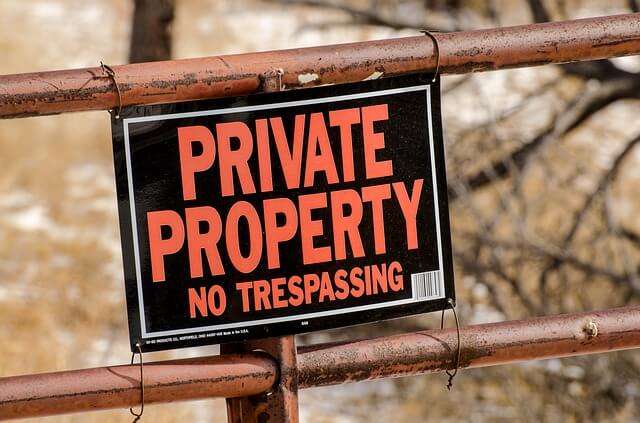
- Harden the property: deadbolts, cameras, lighting, and posted no-trespassing signs.
- Keep it looking lived-in — yard care, mail forwarding, timed lights.
- Screen tenants carefully so a legitimate lease never turns into a holdover problem — see our tenant screening guide.
- Challenge any unauthorized occupation in writing immediately; delay is exactly what the doctrine rewards.
Squatters’ Rights in Other States
Own rentals in more than one state? The clock is different everywhere — compare a few below. Start with our national guide to squatters’ rights and adverse possession, or jump straight to another state:
- Squatters’ rights in Arizona — 10 years
- Squatters’ rights in Texas — 10 years
- Squatters’ rights in New York — 10 years
- Squatters’ rights in Florida — 7 years
- Squatters’ rights in Virginia — 15 years
How PropertyCtrl can Help you Protect your Property
PropertyCtrl offers a powerful and easy-to-use cloud-based property management software with tools and resources that empower you to take control of every aspect of your rental property.
These are some of PropertyCtrl’s features that can help you avoid a potential squatter or adverse possession situation.
The information provided on this website does not, and is not intended to, constitute as legal advice; instead, all information, content, and materials available on this site are for general informational purposes only.
PropertyCtrl Team
Helping landlords and property managers simplify their operations with expert guidance on property management, legal compliance, and financial optimization.