Indiana Squatters’ Rights: Quick Facts (2026)
Indiana's rules differ from every neighboring state, so start with the hard numbers. The table below summarizes what Indiana law actually says, current as of July 2026.
| Question | Indiana rule |
|---|---|
| Standard adverse possession period | 10 years |
| Shorter paths | None |
| Must the squatter pay property taxes? | Yes — Ind. Code § 32-21-7-1 requires the claimant to have paid the property taxes and special assessments during the period |
| Key statute | Ind. Code § 34-11-2-11 |
| How landlords remove a squatter | Serve written notice, then file an eviction (unlawful detainer) or ejectment action in court — never remove a squatter yourself |
This is general information, not legal advice — statutes change and courts add nuance, so confirm current law with a Indiana attorney.
Squatter’s rights in Indiana give certain opportunities to a squatter trying to gain title or possession of a vacant property. If you have a rental property in Indiana, it’s important to equip yourself with the necessary knowledge and insights to navigate this legal landscape and avoid costly and time-consuming situations.
In this article, we will talk about:
1. The Definition of Squatters: Understand who squatters are and how they take possession of vacant properties without legal permission from the owner.
2. How Squatter’s Rights Work in Indiana: Explore the specific opportunities and requirements that squatters have to gain title or possession of a property under Indiana law.
3. Strategies to Protect Your Property: Discover practical and proactive measures you can take to safeguard your property from unauthorized occupation, minimizing the risks associated with squatters.
By gaining a deep understanding of the laws and implementing these strategies, you can stay informed and empowered as a property owner in Indiana. Stay one step ahead and protect your investment from potential squatter-related issues.
The vocabulary in one paragraph: a squatter is someone living in or using property without permission but under some claim of right — which is why police usually treat it as a civil matter rather than simple trespassing. Adverse possession is the doctrine that lets a squatter who possesses property in a way that is hostile, actual, open, exclusive, and continuous for long enough eventually take legal title. Our national squatters’ rights guide explains each element with examples; this page covers what Indiana law adds on top.
Exploring Squatter’s Rights in Indiana: Requirements and Process
For a person to claim squatter’s rights in Indiana and gain ownership of a property through adverse possession, they must meet all of the five adverse possession elements mentioned above, as well as meet additional requirements as stipulated by adverse possession laws in Indiana.
A person claiming adverse possession in Indiana must:
→ Meet all 5 adverse possession elements mentioned above.
→ Required Time of Occupation: Have continuous possession of the property for a minimum of 10 years.
→ Color of title: Is not required in Indiana.
→ Property Taxes: Timely pay any required state, county, or municipal property taxes for the required 10 years of occupation.
A squatter meeting the minimum requirements to claim property can initiate legal proceedings through Indiana’s court system and present its adverse possession claim in front of a judge.
For more information on squatter’s rights in IN and the adverse possession requirements, you can review Title 32- Article 21 – Ch.7 of the Indiana Code.
Questions?
Chat with a Squatters Rights Expert Now! Start Chat
Color of Title in Indiana
Color of title means a document that looks like it conveys ownership — a deed, a court decree — but is legally defective. Why it matters here: Indiana has no color-of-title shortcut — but every claimant must have paid the property taxes for the full 10 years (Ind. Code § 32-21-7-1). For the general doctrine, see the national guide.
How to Remove Squatters in Indiana: Legal Procedures and Recommendations
In Indiana, a squatter who refuses to leave is removed through an eviction or ejectment action in court. Police will generally not remove someone claiming a right to occupy without a court order, so start the filing promptly and keep written records of every notice you serve.
It is important to note that squatter’s rights in Indiana grant a squatter certain rights compared to a trespasser, and dealing with a squatter requires caution from the landlord.
When dealing with someone that has taken possession of a property without the owner’s permission, it is recommended to consult a local attorney that specializes in eviction law and has a vast knowledge of eviction laws and squatter’s rights in Indiana.
Although, in most cases, evicting a squatter must be handled through the Indiana court system with judicial action, there are certain avenues a landlord or property manager can take to remove a squatter from their property.
Call the Sheriff
The sheriff’s office may be unable to remove the person from the property if the person taking possession of the property is considered a squatter and not a trespasser.
However, calling the sheriff is a good initial step because it logs a record of the incident and generates a report that the property owner can then show as evidence if the case escalates to the court system.
Start the Judicial Eviction Process
Unlike other states, Indiana DOES NOT have specific laws on how to remove squatters, but to begin the removal process, the property owner or manager must initiate a judicial eviction and give notice to the person occupying the property before they can be legally removed by the sheriff’s office.
In the early stages, you may not be looking at a situation in which you have to involve the court system.
If the squatter does not have a legal claim to the property through adverse possession, in Indiana, a landlord can remove a squatter by serving them with an Eviction Notice.
There are various types of eviction notices in the state of Indiana.
→ 10-Day Notice to Pay (for non-payment)
→ 45-Day Notice to Quit (for illegal activity related to drugs)
→ Immediate Eviction (for illegal activity)
Start the Eviction Proceedings
Evicting a squatter requires due process from the part of the landlord and requires a careful approach.
If a squatter is claiming adverse possession and is refusing to leave the premises after the period allotted in the Eviction Notice, then the next step would be to start proceedings in the county’s court.
This will initiate a hearing process in which the case will be presented in front of a judge and a ruling will be made based on the case details.
We recommend consulting an attorney with vast knowledge of property law in Indiana to avoid possible legal recourses against you, or the property.
Need an Eviction Notice?
Free Real Estate Documents in Minutes! Click Here
Protecting Your Indiana Rental from Squatters
Every adverse possession claim starts with an owner who wasn’t paying attention. Close that door:
- Inspect vacant units on a schedule, and document each visit with dated photos.
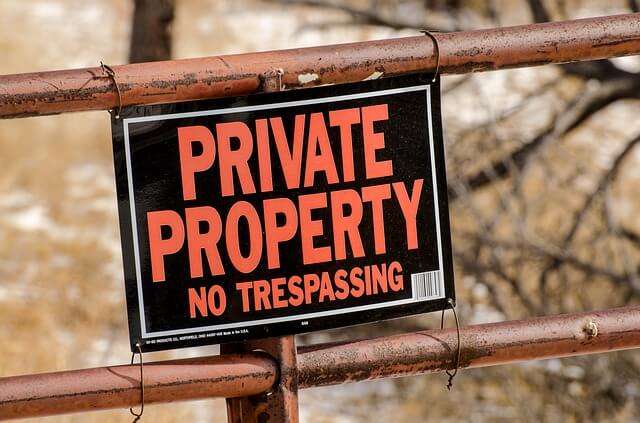
- Harden the property: deadbolts, cameras, lighting, and posted no-trespassing signs.
- Keep it looking lived-in — yard care, mail forwarding, timed lights.
- Screen tenants carefully so a legitimate lease never turns into a holdover problem — see our tenant screening guide.
- Challenge any unauthorized occupation in writing immediately; delay is exactly what the doctrine rewards.
Squatters’ Rights in Other States
Own rentals in more than one state? The clock is different everywhere — compare a few below. Start with our national guide to squatters’ rights and adverse possession, or jump straight to another state:
- Squatters’ rights in Ohio — 21 years
- Squatters’ rights in Michigan — 15 years
- Squatters’ rights in Tennessee — 20 years
- Squatters’ rights in Pennsylvania — 21 years
- Squatters’ rights in Virginia — 15 years
PropertyCtrl: Empowering Property Owners to Safeguard Against Squatters
PropertyCtrl offers a powerful and easy-to-use cloud-based property management software, with tools and resources that empower you to take control of every aspect of your rental property.
This is how PropertyCtrl’s features can help you avoid a potential squatter or adverse possession situation.
The information provided on this website does not, and is not intended to, constitute as legal advice; instead, all information, content, and materials available on this site are for general informational purposes only.
PropertyCtrl Team
Helping landlords and property managers simplify their operations with expert guidance on property management, legal compliance, and financial optimization.